Minorcan Clam Chowder with Datil Peppers and Salt Pork
This is the real St. Augustine chowder, the one the Minorcan families have been making for 250 years. It is tomato-based, not cream-based, fired with fresh datil peppers and built on a backbone of salt pork and clam liquor. A bowl of it tastes like coastal Florida before the condos arrived.
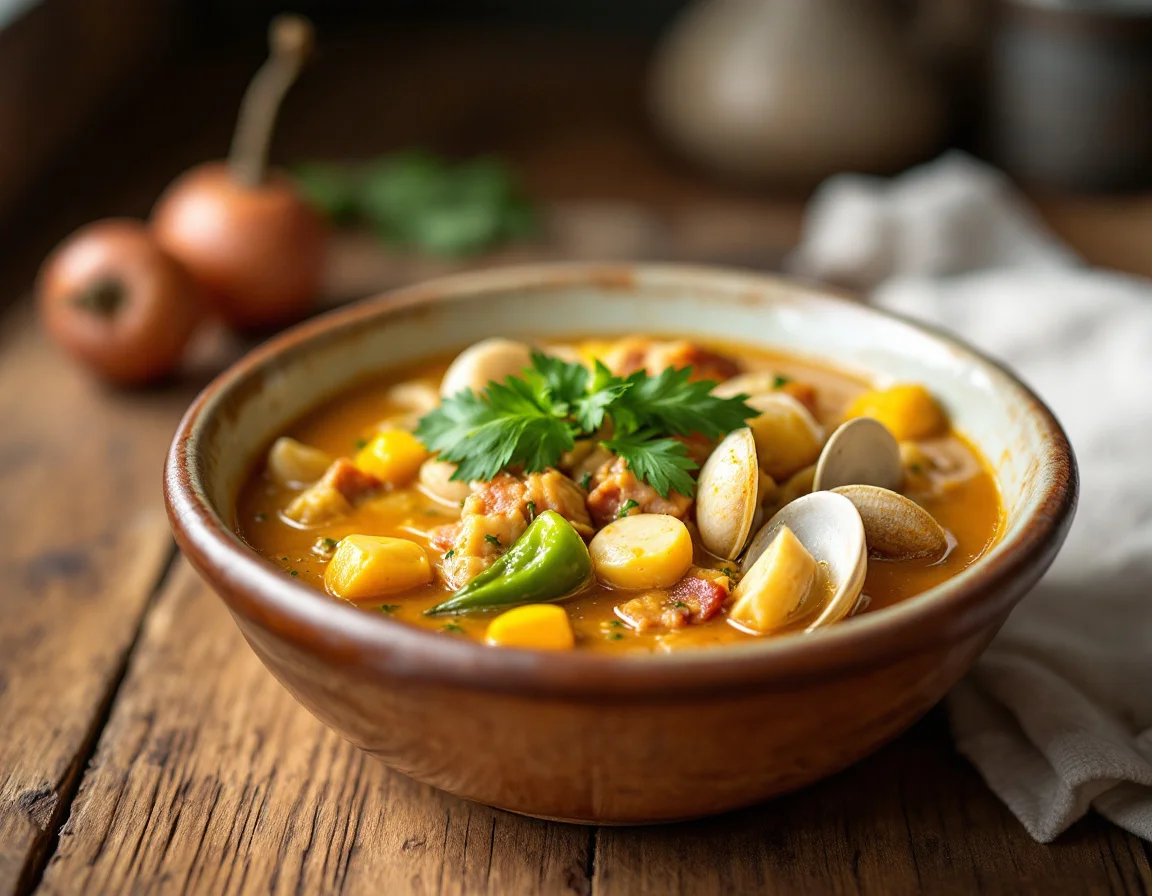
Minorcan clam chowder: red, briny, and datil-hot, just the way St. Augustine made it.
Minorcan clam chowder does not look like any other chowder you have seen. It is red, not white. It is built on tomatoes and datil peppers, not cream and flour. And it has been made more or less the same way in St. Augustine since the 1700s, which is longer than Florida has been a state.
The Minorcan community that settled in St. Augustine brought their Mediterranean cooking instincts with them, and tomatoes made sense in a way that cream never would have in the Florida heat. Add the datil pepper, which became theirs alone in this country, and you have a chowder with a real identity. This is not a riff or a fusion. It is the dish itself. You can read how we raise them here.
Ingredients
Method
- 1
Steam the clams: put them in a wide pot with 2 cups of water over high heat, cover, and cook until they open, 6 to 8 minutes. Discard any that stay shut. Pull the clam meat from the shells and chop it roughly. Strain the cooking liquid through a fine-mesh strainer or a paper towel-lined colander and reserve every drop.
- 2
Wipe out the pot and set it over medium heat. Add the salt pork and render it slowly, stirring occasionally, until the fat has rendered out and the pieces are golden and crisp, about 8 minutes. Do not drain the fat.
- 3
Add the onion to the rendered pork fat and cook, stirring, until softened and just starting to color, about 5 minutes. Add the garlic and datil peppers and cook another 2 minutes, until fragrant.
- 4
Pour in the crushed tomatoes with their juices and stir to combine. Add the reserved clam broth plus enough water to bring the total liquid to about 4 cups. Bring to a gentle boil.
- 5
Add the potatoes, reduce the heat to a steady simmer, and cook uncovered until the potatoes are completely tender, about 18 minutes. Taste the broth and add salt carefully, remembering the clam liquor and salt pork are already doing a lot of work.
- 6
Stir the chopped clams back in and simmer just 2 more minutes to warm them through. Pull the pot off the heat. Serve in deep bowls with good crusty bread alongside for soaking up the broth.
- 7
Let leftovers sit overnight if you can. Like most chowders rooted in this tradition, it tastes even better on day two.
Notes from our kitchen
- Fresh datil peppers are the soul of this chowder. If you cannot find them locally, look for a datil pepper grower at a St. Augustine or Northeast Florida farmers market. In a real pinch, a fresh habanero is the closest substitute in heat and fruity character, but the flavor is not quite the same.
- Do not overcook the clams once you add them back at the end. They only need a couple of minutes to warm through. Any longer and they turn rubbery, and all that careful work steaming them open goes to waste.
- Minorcan chowder is meant to be brothy, not thick. If yours looks too thin when the potatoes are done, just keep simmering uncovered for a few more minutes and it will tighten up naturally.
Common questions
Why is Minorcan chowder red instead of cream-based?
The Minorcan settlers who arrived in St. Augustine in 1777 came from the Mediterranean, where tomatoes were already common in cooking. Cream-based New England chowder was not part of their tradition. The tomato base stuck, and 250 years later it is still what sets this chowder apart from every other style.
Can I use canned clams to save time?
You can in a pinch, but you will give up the most important ingredient in the pot, which is the fresh clam broth. That liquid carries so much flavor that it practically is the chowder. If fresh clams are not available, look for frozen clams and bottled clam juice as a better compromise than canned.
How much heat do fresh datil peppers bring?
Datil peppers are genuinely hot, in the same range as a habanero, but they have a fruity, almost sweet character behind the burn that makes them distinct. With seeds removed you get medium heat that most people can handle. With seeds in, the chowder has a serious kick. Start with seeds out if you are cooking for a mixed crowd.