Peruvian-Style Gulf Grouper Ceviche with Leche de Tigre and Sweet Potato
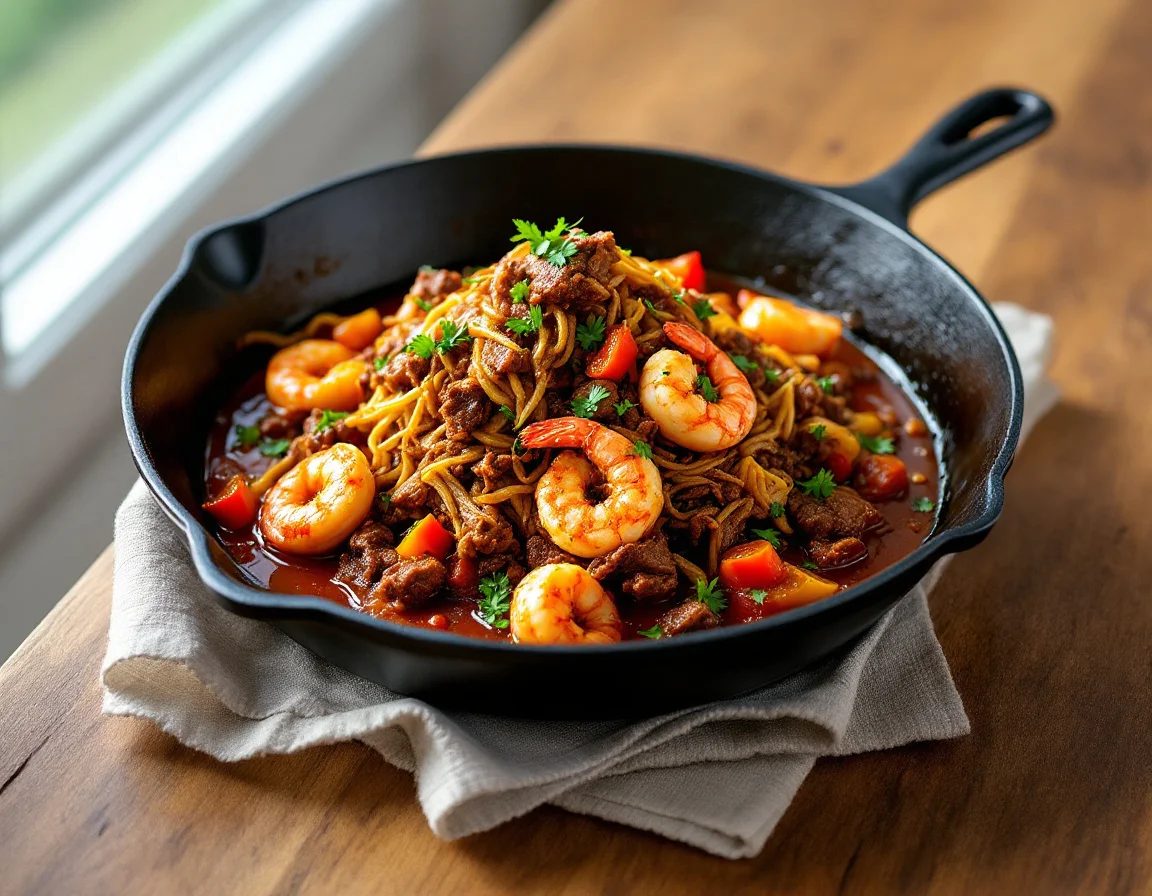
Fresh Gulf grouper cured in a bright, sharp leche de tigre built from aji amarillo, lime, and ginger, then served over slices of boiled Florida sweet potato with choclo-style corn and thin-sliced red onion. This is Peruvian ceviche the way it is made in the kitchens of Doral and Kendall, where the fish is local but the soul of the dish is completely South American. It is fast, cold, and one of the most alive things you can put on a table in Florida.
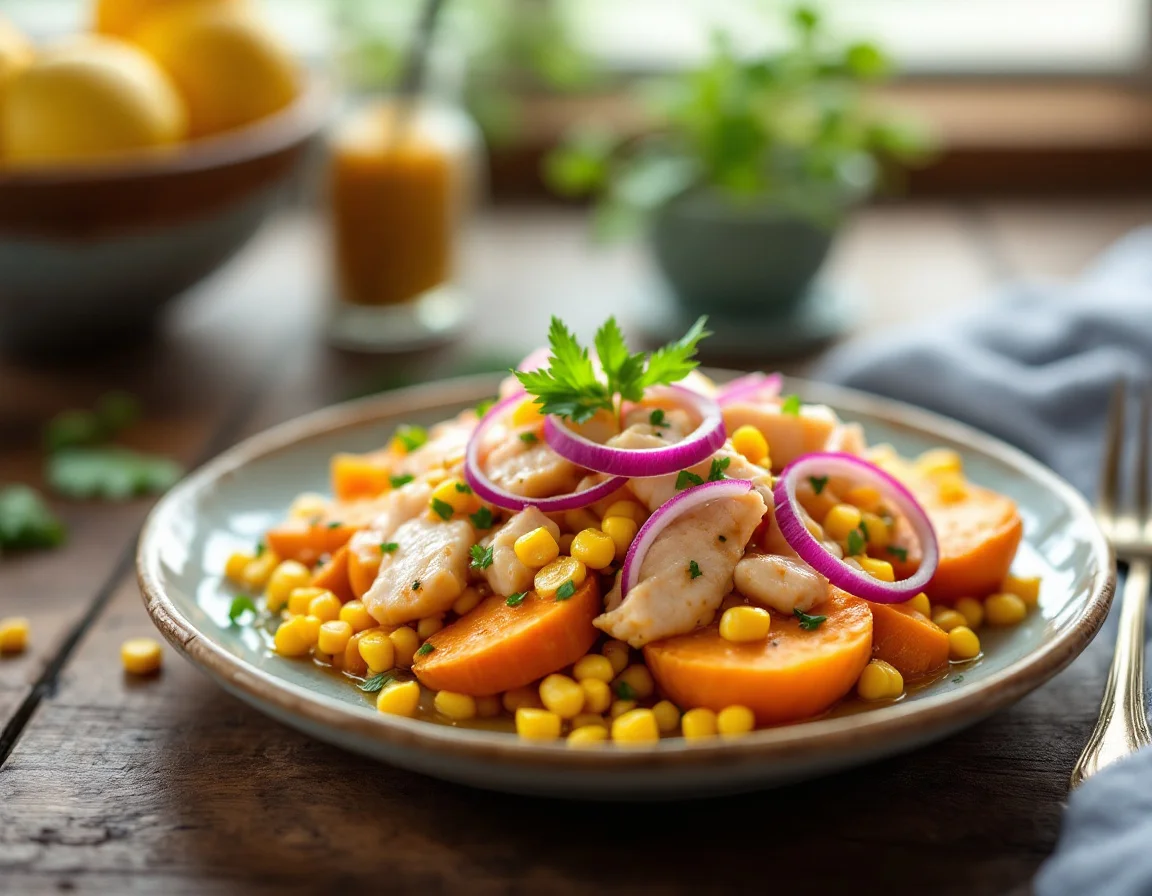
Gulf grouper cured just enough to turn pearly at the edges, afloat in a sharp, golden leche de tigre.
Drive through Doral on a weekday lunch and you will find Peruvian cevicherias doing a fast, serious business. The fish changes depending on what came in, but the structure of the dish is fixed: raw fish cured briefly in leche de tigre, the sharp lime-and-aji-amarillo liquid that is half marinade and half sauce, laid over boiled sweet potato and corn. It is one of the great dishes of the South American table, and it translates to Florida without losing a thing.
Gulf grouper is about as good a ceviche fish as exists. It is firm enough to hold its shape through the cure, mild enough to let the leche de tigre carry the flavor, and available fresh year-round from local boats. Pair it with a Florida sweet potato and ears of sweet corn from a roadside stand and the whole dish is built from within a few hundred miles of wherever you are standing. You can read how we raise them here.
Ingredients
Method
- 1
Bring a pot of salted water to a boil. Add the sweet potato rounds and cook until just tender, about 10 minutes. Add the corn rounds for the last 4 minutes. Drain everything and let it cool to room temperature. You want both fully cooked but not falling apart.
- 2
While the vegetables cool, make the leche de tigre. In a blender, combine the lime juice, aji amarillo paste, grated ginger, a big pinch of salt, and about 2 tablespoons of cold water. Blend until smooth. Taste it: it should be sharp, a little hot, and bright gold. Adjust salt if needed.
- 3
Place the sliced red onion in a small bowl of cold water with a pinch of salt and let it soak for 5 minutes. This pulls the sharp bite back just enough without killing the flavor. Drain and pat dry.
- 4
Pat the grouper cubes dry with a paper towel and place them in a wide, non-reactive bowl. Pour the leche de tigre over the fish and fold gently to coat every piece. Let the fish cure for exactly 8 minutes, turning once at the halfway point. The outside will turn opaque and white while the center stays translucent and pearly. That is exactly what you want. Do not walk away and let it over-cure.
- 5
Arrange the sweet potato rounds across the bottom of four shallow bowls or a wide serving platter. Tuck the corn rounds in around them. Spoon the cured grouper over the top along with all the leche de tigre from the bowl. Scatter the drained red onion over everything. Finish with a small pinch of salt and serve immediately.
Notes from our kitchen
- The fish must be as fresh as possible. Grouper that has been sitting two days will cure unevenly and taste dull in the acid. Ask your fishmonger when it came in, and if it was not that day, use it in a soup instead and come back tomorrow.
- Aji amarillo paste is sold in jars at most Latin grocery stores in South Florida and is worth keeping in the refrigerator. It is the irreplaceable flavor here, fruity and moderately hot with a color that turns the leche de tigre a beautiful golden orange. Do not substitute habanero or jalapeño; the flavor profile is completely different.
- Serve immediately after plating. Ceviche waits for no one. If you must hold it, keep the fish separate from the leche de tigre and combine at the last minute.
Common questions
Can I use a different Florida fish?
Yes. Mahi and snapper both work very well here. Mahi has a slightly firmer texture that holds up nicely through the cure. Whatever you use, it needs to be fresh that day.
How hot is aji amarillo? My family does not love a lot of heat.
Aji amarillo is moderately hot, somewhere between a serrano and a habanero, but its fruity flavor is distinct from both. Start with one tablespoon of paste in the leche de tigre instead of two and taste before you add more. The heat also mellows slightly once the acid goes to work.
Is this the same as a Doral or Miami restaurant version of ceviche?
Pretty close. Peruvian ceviche in South Florida is made with whatever the freshest local fish is, and Gulf grouper fits that tradition perfectly. The leche de tigre, sweet potato, and corn are the non-negotiable markers of the dish. Some cooks add a little fish stock or celery to the tiger's milk base, which you can do here too.